

Online or onsite, instructor-led live Deep Learning (DL) training courses demonstrate through hands-on practice the fundamentals and applications of Deep Learning and cover subjects such as deep machine learning, deep structured learning, and hierarchical learning.
Deep Learning training is available as "online live training" or "onsite live training". Online live training (aka "remote live training") is carried out by way of an interactive, remote desktop. Georgia onsite live Deep Learning trainings can be carried out locally on customer premises or in NobleProg corporate training centers.
NobleProg -- Your Local Training Provider
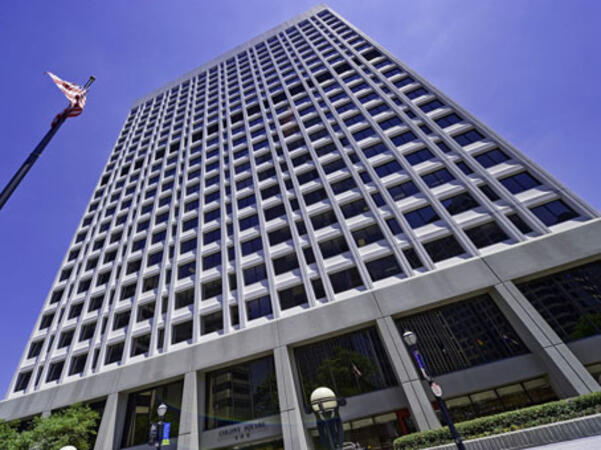
Atlanta, GA – Regus at Colony Squar
1201 Peachtree Street NE, Suite 200, Atlanta, United States, 30361
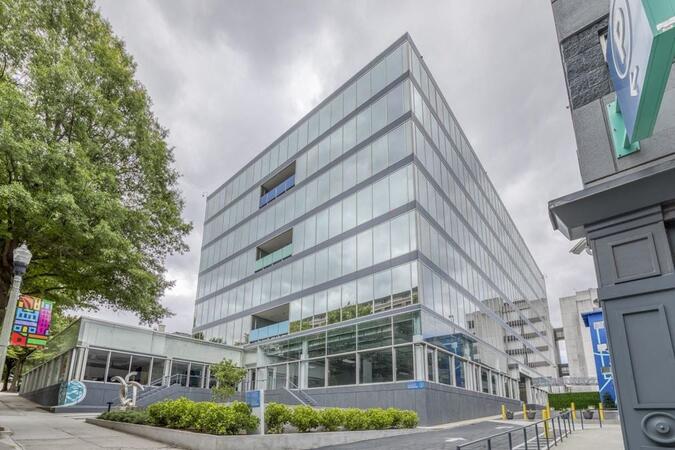
The venue is centrally located in Midtown Atlanta within the prominent Colony Square complex at 1201 Peachtree Street NE, easily accessed by car via I‑75/85 or GA‑400, with several parking garages nearby. From Hartsfield–Jackson Atlanta International Airport (ATL), around 15 miles south, a taxi or rideshare typically takes 20–30 minutes north along I‑75/85 N. Public transit users can take MARTA Rail to the Arts Center or Midtown stations (0.3–0.5 miles away) and walk easily, and numerous MARTA bus routes along Peachtree Street stop directly outside the entrance.
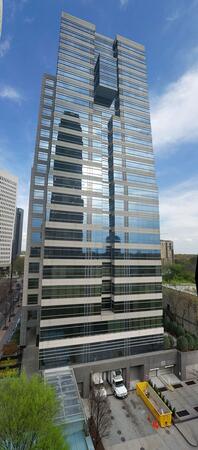
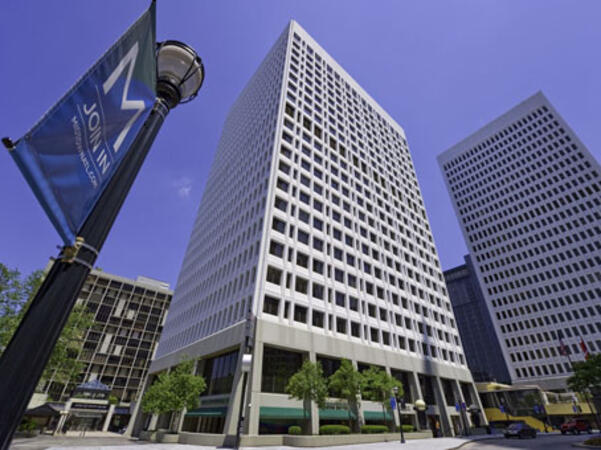
Atlanta, GA – The Proscenium
1170 Peachtree Street NE, Atlanta, United States, 30309
The venue is located in the heart of Midtown Atlanta in the Proscenium high–rise at 1170 Peachtree Street NE, easily accessible by car via I‑75/85 and GA‑400 with several parking garages nearby. Visitors arriving from Hartsfield–Jackson Atlanta International Airport (ATL), about 15 miles south, can expect a taxi or rideshare ride taking 20–30 minutes via I‑75/85 North. Public transit is seamless with MARTA Rail service; the Arts Center and Midtown stations are within walking distance (approximately 0.3–0.4 miles), and multiple MARTA bus routes also serve Peachtree Street.
Decatur, GA – Regus at One West Court Square
One West Court Square, Suite 750, Decatur, United States, 30030
The venue is located in the heart of downtown Decatur within One West Court Square, easily reached by car via I‑20 and I‑285, with several public parking decks directly adjacent. Travelers from Hartsfield–Jackson Atlanta International Airport (ATL), approximately 17 miles southwest, can expect a taxi or rideshare ride of around 25–30 minutes via I‑20 East. Public transit is particularly convenient: MARTA rail users can disembark at Decatur Station (about 0.15 miles away) and walk a few minutes to the building entrance. Local bus routes also serve Trinity Place and Swanton Way, putting the center within easy reach.
Atlanta, GA – Regus at One Hartsfield
100 Hartsfield Centre Parkway, Suite 500, Atlanta, United States, 30354
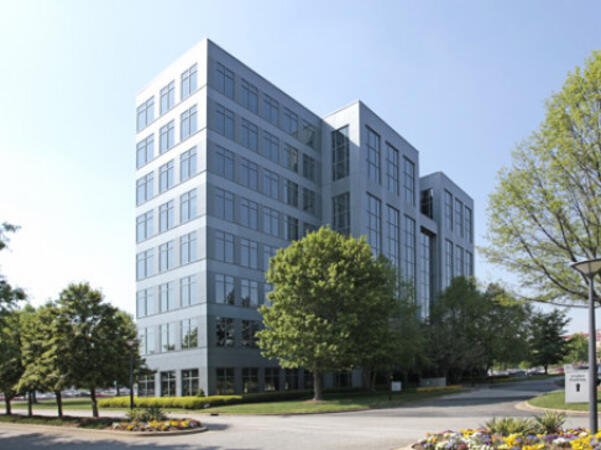
The venue is located in the One Hartsfield Center office building, adjacent to Hartsfield–Jackson Atlanta International Airport, easily reached by car via I‑75/I‑85 or GA‑138, with abundant on-site parking. Visitors arriving from ATL airport can walk or take a shuttle to the building, or opt for a quick 2–3‑minute taxi or rideshare ride. Public transit users can board MARTA from the Airport Station and ride one stop to College Park Station, then catch a connecting shuttle or enjoy a brief walk of about half a mile.
Atlanta, GA – Regus at Peachtree
260 Peachtree Street NW, Suite 2200, Atlanta, United States, 30303
The venue is situated in the iconic Coastal States Building at 260 Peachtree Street in downtown Atlanta, accessible by car via I‑75/85 or I‑20 with convenient parking garages nearby. From Hartsfield–Jackson Atlanta International Airport (ATL), about 12 miles south, a taxi or rideshare along I‑75/85 North takes approximately 15–20 minutes. For public transit, MARTA rail users can disembark at Five Points Station and walk 0.5 miles northeast, or exit at Peachtree Center Station and walk two blocks north—both routes offering easy access.
Augusta, GA – At Broad Street
823 Broad Street, Augusta, United States, 3090
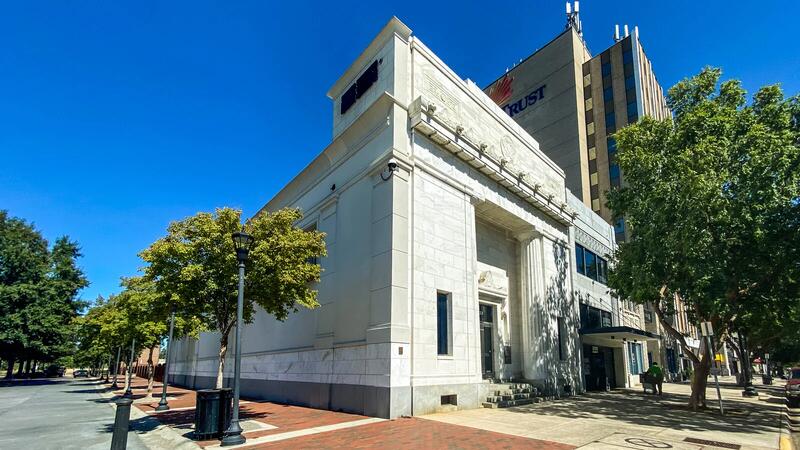
The venue is located in the heart of downtown Augusta on Broad Street, easily accessible by car via I‑20 with several public parking garages nearby. From Augusta Regional Airport (AGS), about 9 miles west, taxis or rideshares typically take 15–20 minutes via I‑20. Public transit is available through Augusta Public Transit buses with routes along Broad Street, stopping within a few blocks of the venue, offering a convenient option for attendees without a car.
Savannah, GA – Regus at Bull Street
100 Bull St Downtown, Suite 200, Savannah, United States, 31401
The venue is located in the historic downtown area on Bull Street in the Altmayer Building, easily accessible by car via I‑16 and U.S. 17, with several public garages nearby. From Savannah/Hilton Head International Airport (SAV), about 12 miles west, taxis or rideshares typically take 15–20 minutes via U.S. 17 South. Public transit is available via Chatham Area Transit (CAT) buses, with frequent service along Bull and Broughton Streets; Johnson Square Station is just a couple minutes’ walk from the venue.
This instructor-led, live training in Georgia (online or onsite) is aimed at intermediate-level developers, data scientists, and AI practitioners who wish to leverage TensorFlow Lite for Edge AI applications.
By the end of this training, participants will be able to:
Understand the fundamentals of TensorFlow Lite and its role in Edge AI.
Develop and optimize AI models using TensorFlow Lite.
Deploy TensorFlow Lite models on various edge devices.
Utilize tools and techniques for model conversion and optimization.
Implement practical Edge AI applications using TensorFlow Lite.
This instructor-led, live training in Georgia (online or onsite) is aimed at advanced-level professionals who wish to deepen their understanding of computer vision and explore TensorFlow's capabilities for developing sophisticated vision models using Google Colab.
By the end of this training, participants will be able to:
Build and train convolutional neural networks (CNNs) using TensorFlow.
Leverage Google Colab for scalable and efficient cloud-based model development.
Implement image preprocessing techniques for computer vision tasks.
Deploy computer vision models for real-world applications.
Use transfer learning to enhance the performance of CNN models.
Visualize and interpret the results of image classification models.
This instructor-led, live training in Georgia (online or onsite) is aimed at intermediate-level data scientists and developers who wish to understand and apply deep learning techniques using the Google Colab environment.
By the end of this training, participants will be able to:
Set up and navigate Google Colab for deep learning projects.
Understand the fundamentals of neural networks.
Implement deep learning models using TensorFlow.
Train and evaluate deep learning models.
Utilize advanced features of TensorFlow for deep learning.
This instructor-led, live training in Georgia (online or onsite) is aimed at advanced-level professionals who wish to specialize in cutting-edge deep learning techniques for NLU.
By the end of this training, participants will be able to:
Understand the key differences between NLU and NLP models.
Apply advanced deep learning techniques to NLU tasks.
Explore deep architectures such as transformers and attention mechanisms.
Leverage future trends in NLU for building sophisticated AI systems.
This instructor-led, live training in Georgia (online or onsite) is aimed at advanced-level professionals who wish to explore state-of-the-art XAI techniques for deep learning models, with a focus on building interpretable AI systems.
By the end of this training, participants will be able to:
Understand the challenges of explainability in deep learning.
Implement advanced XAI techniques for neural networks.
Interpret decisions made by deep learning models.
Evaluate the trade-offs between performance and transparency.
This instructor-led, live training in Georgia (online or onsite) is aimed at intermediate to advanced-level data scientists, machine learning engineers, deep learning researchers, and computer vision experts who wish to expand their knowledge and skills in deep learning for text-to-image generation.
By the end of this training, participants will be able to:
Understand advanced deep learning architectures and techniques for text-to-image generation.
Implement complex models and optimizations for high-quality image synthesis.
Optimize performance and scalability for large datasets and complex models.
Tune hyperparameters for better model performance and generalization.
Integrate Stable Diffusion with other deep learning frameworks and tools
This instructor-led, live training in Georgia (online or onsite) is aimed at advanced-level professionals who wish to leverage AI techniques to revolutionize drug discovery and development processes.
By the end of this training, participants will be able to:
Understand the role of AI in drug discovery and development.
Apply machine learning techniques to predict molecular properties and interactions.
Use deep learning models for virtual screening and lead optimization.
Integrate AI-driven approaches into the clinical trial process.
This instructor-led, live training in Georgia (online or onsite) is aimed at biologists who wish to understand how AlphaFold works and use AlphaFold models as guides in their experimental studies.
By the end of this training, participants will be able to:
Understand the basic principles of AlphaFold.
Learn how AlphaFold works.
Learn how to interpret AlphaFold predictions and results.
This instructor-led, live training in Georgia (online or onsite) is aimed at beginner to intermediate-level data scientists and machine learning engineers who wish to improve the performance of their deep learning models.
By the end of this training, participants will be able to:
Understand the principles of distributed deep learning.
Install and configure DeepSpeed.
Scale deep learning models on distributed hardware using DeepSpeed.
Implement and experiment with DeepSpeed features for optimization and memory efficiency.
This instructor-led, live training in Georgia (online or onsite) is aimed at beginner-level to intermediate-level developers who wish to use Large Language Models for various natural language tasks.
By the end of this training, participants will be able to:
Set up a development environment that includes a popular LLM.
Create a basic LLM and fine-tune it on a custom dataset.
Use LLMs for different natural language tasks such as text summarization, question answering, text generation, and more.
Debug and evaluate LLMs using tools such as TensorBoard, PyTorch Lightning, and Hugging Face Datasets.
This instructor-led, live training in (online or onsite) is aimed at data scientists, machine learning engineers, and computer vision researchers who wish to leverage Stable Diffusion to generate high-quality images for a variety of use cases.
By the end of this training, participants will be able to:
Understand the principles of Stable Diffusion and how it works for image generation.
Build and train Stable Diffusion models for image generation tasks.
Apply Stable Diffusion to various image generation scenarios, such as inpainting, outpainting, and image-to-image translation.
Optimize the performance and stability of Stable Diffusion models.
In this instructor-led, live training in Georgia, participants will learn the most relevant and cutting-edge machine learning techniques in Python as they build a series of demo applications involving image, music, text, and financial data.
By the end of this training, participants will be able to:
Implement machine learning algorithms and techniques for solving complex problems.
Apply deep learning and semi-supervised learning to applications involving image, music, text, and financial data.
Push Python algorithms to their maximum potential.
Use libraries and packages such as NumPy and Theano.
This is a 4 day course introducing AI and it's application using the Python programming language. There is an option to have an additional day to undertake an AI project on completion of this course.
Deep Reinforcement Learning (DRL) combines reinforcement learning principles with deep learning architectures to enable agents to make decisions through interaction with their environments. It underpins many modern AI advancements such as self-driving vehicles, robotics control, algorithmic trading, and adaptive recommendation systems. DRL allows an artificial agent to learn strategies, optimize policies, and make autonomous decisions based on trial and error using reward-based learning.
This instructor-led, live training (online or onsite) is aimed at intermediate-level developers and data scientists who wish to learn and apply Deep Reinforcement Learning techniques to build intelligent agents capable of autonomous decision-making in complex environments.
By the end of this training, participants will be able to:
Understand the theoretical foundations and mathematical principles of Reinforcement Learning.
Implement key RL algorithms including Q-Learning, Policy Gradients, and Actor-Critic methods.
Build and train Deep Reinforcement Learning agents using TensorFlow or PyTorch.
Apply DRL to real-world applications such as games, robotics, and decision optimization.
Troubleshoot, visualize, and optimize training performance using modern tools.
Format of the Course
Interactive lecture and guided discussion.
Hands-on exercises and practical implementations.
Live coding demonstrations and project-based applications.
Course Customization Options
To request a customized version of this course (e.g., using PyTorch instead of TensorFlow), please contact us to arrange.
In this instructor-led, live training in Georgia, participants will learn how to implement deep learning models for telecom using Python as they step through the creation of a deep learning credit risk model.
By the end of this training, participants will be able to:
Understand the fundamental concepts of deep learning.
Learn the applications and uses of deep learning in telecom.
Use Python, Keras, and TensorFlow to create deep learning models for telecom.
Build their own deep learning customer churn prediction model using Python.
This course has been created for managers, solutions architects, innovation officers, CTOs, software architects and anyone who is interested in an overview of applied artificial intelligence and the nearest forecast for its development.
This course covers AI (emphasizing Machine Learning and Deep Learning) in Automotive Industry. It helps to determine which technology can be (potentially) used in multiple situation in a car: from simple automation, image recognition to autonomous decision making.
Artificial Neural Network is a computational data model used in the development of Artificial Intelligence (AI) systems capable of performing "intelligent" tasks. Neural Networks are commonly used in Machine Learning (ML) applications, which are themselves one implementation of AI. Deep Learning is a subset of ML.
This is a 4 day course introducing AI and it's application. There is an option to have an additional day to undertake an AI project on completion of this course.
This instructor-led, live training in Georgia (online or onsite) is aimed at intermediate-level data scientists and statisticians who wish to prepare data, build models, and apply machine learning techniques effectively in their professional domains.
By the end of this training, participants will be able to:
Understand and implement various Machine Learning algorithms.
Prepare data and models for machine learning applications.
Conduct post hoc analyses and visualize results effectively.
Apply machine learning techniques to real-world, sector-specific scenarios.
This instructor-led, live training in Georgia (online or onsite) is aimed at researchers and developers who wish to use Chainer to build and train neural networks in Python while making the code easy to debug.
By the end of this training, participants will be able to:
Set up the necessary development environment to start developing neural network models.
Define and implement neural network models using a comprehensible source code.
Execute examples and modify existing algorithms to optimize deep learning training models while leveraging GPUs for high performance.
This instructor-led, live training in Georgia (online or onsite) provides an introduction into the field of pattern recognition and machine learning. It touches on practical applications in statistics, computer science, signal processing, computer vision, data mining, and bioinformatics.
By the end of this training, participants will be able to:
Apply core statistical methods to pattern recognition.
Use key models like neural networks and kernel methods for data analysis.
Implement advanced techniques for complex problem-solving.
Improve prediction accuracy by combining different models.
This course is general overview for Deep Learning without going too deep into any specific methods. It is suitable for people who want to start using Deep learning to enhance their accuracy of prediction.
This instructor-led, live training in Georgia (online or onsite) is aimed at researchers and developers who wish to install, set up, customize, and use the DeepMind Lab platform to develop general artificial intelligence and machine learning systems.
By the end of this training, participants will be able to:
Customize DeepMind Lab to build and run an environment that suits learning and training needs.
Use DeepMind Lab's 3D simulation environment to train learning agents in a first-person viewpoint.
Facilitate agent evaluation to develop intelligence in a 3D game-like world.
Machine learning is a branch of Artificial Intelligence wherein computers have the ability to learn without being explicitly programmed. Deep learning is a subfield of machine learning which uses methods based on learning data representations and structures such as neural networks.
This instructor-led, live training in Georgia (online or onsite) is aimed at business analysts, data scientists, and developers who wish to build and implement deep learning models to accelerate revenue growth and solve problems in the business world.
By the end of this training, participants will be able to:
Understand the core concepts of machine learning and deep learning.
Get insights on the future of business and industry with ML and DL.
Define business strategies and solutions with deep learning.
Learn how to apply data science and deep learning in solving business problems.
Build deep learning models using Python, Pandas, TensorFlow, CNTK, Torch, Keras, etc.
This course is suitable for Deep Learning researchers and engineers interested in utilizing available tools (mostly open source) for analyzing computer images
This instructor-led, live training in Georgia (online or onsite) is aimed at data scientists who wish to accelerate real-time machine learning applications and deploy them at scale.
By the end of this training, participants will be able to:
Install the OpenVINO toolkit.
Accelerate a computer vision application using an FPGA.
Execute different CNN layers on the FPGA.
Scale the application across multiple nodes in a Kubernetes cluster.
This instructor-led, live training in Georgia (online or onsite) is aimed at data scientists who wish to use TensorFlow to analyze potential fraud data.
By the end of this training, participants will be able to:
Create a fraud detection model in Python and TensorFlow.
Build linear regressions and linear regression models to predict fraud.
Develop an end-to-end AI application for analyzing fraud data.
This instructor-led, live training in Georgia (online or onsite) is aimed at developers or data scientists who wish to use Horovod to run distributed deep learning trainings and scale it up to run across multiple GPUs in parallel.
By the end of this training, participants will be able to:
Set up the necessary development environment to start running deep learning trainings.
Install and configure Horovod to train models with TensorFlow, Keras, PyTorch, and Apache MXNet.
Scale deep learning training with Horovod to run on multiple GPUs.
In this instructor-led, live training, participants will learn how to use Matlab to design, build, and visualize a convolutional neural network for image recognition.
By the end of this training, participants will be able to:
Build a deep learning model
Automate data labeling
Work with models from Caffe and TensorFlow-Keras
Train data using multiple GPUs, the cloud, or clusters
Audience
Developers
Engineers
Domain experts
Format of the course
Part lecture, part discussion, exercises and heavy hands-on practice
This instructor-led, live training in Georgia (online or onsite) is aimed at beginner-level to intermediate-level professionals who wish to develop their understanding of machine learning algorithms, deep learning techniques, and AI-driven decision-making. The course provides hands-on experience with machine learning concepts, deep learning models, and practical implementations using R.
By the end of this training, participants will be able to:
Understand the fundamentals of machine learning and deep learning.
Apply various machine learning algorithms for regression, classification, clustering, and anomaly detection.
Use deep learning architectures such as artificial neural networks (ANNs).
Implement supervised and unsupervised learning models.
Evaluate model performance and optimize hyperparameters.
Use R for data analysis, visualization, and machine learning applications.
This classroom based training session will contain presentations and computer based examples and case study exercises to undertake with relevant neural and deep network libraries
This instructor-led, live training in Georgia (online or onsite) is aimed at software engineers who wish to program in Python with OpenCV 4 for deep learning.
By the end of this training, participants will be able to:
View, load, and classify images and videos using OpenCV 4.
Implement deep learning in OpenCV 4 with TensorFlow and Keras.
Run deep learning models and generate impactful reports from images and videos.
In this instructor-led, live training, participants will learn advanced techniques for Machine Learning with R as they step through the creation of a real-world application.
By the end of this training, participants will be able to:
Understand and implement unsupervised learning techniques
Apply clustering and classification to make predictions based on real world data.
Visualize data to quicly gain insights, make decisions and further refine analysis.
Improve the performance of a machine learning model using hyper-parameter tuning.
Put a model into production for use in a larger application.
Apply advanced machine learning techniques to answer questions involving social network data, big data, and more.
This instructor-led, live training in Georgia (online or onsite) is aimed at developers and data scientists who wish to use Tensorflow 2.x to build predictors, classifiers, generative models, neural networks and so on.
By the end of this training, participants will be able to:
Install and configure TensorFlow 2.x.
Understand the benefits of TensorFlow 2.x over previous versions.
Build deep learning models.
Implement an advanced image classifier.
Deploy a deep learning model to the cloud, mobile and IoT devices.
This instructor-led, live training in Georgia (online or onsite) is aimed at engineers who wish to write, load and run machine learning models on very small embedded devices.
By the end of this training, participants will be able to:
Install TensorFlow Lite.
Load machine learning models onto an embedded device to enable it to detect speech, classify images, etc.
Add AI to hardware devices without relying on network connectivity.
TensorFlow is a 2nd Generation API of Google's open source software library for Deep Learning. The system is designed to facilitate research in machine learning, and to make it quick and easy to transition from research prototype to production system.
Audience
This course is intended for engineers seeking to use TensorFlow for their Deep Learning projects
After completing this course, delegates will:
understand TensorFlow’s structure and deployment mechanisms
be able to carry out installation / production environment / architecture tasks and configuration
be able to assess code quality, perform debugging, monitoring
be able to implement advanced production like training models, building graphs and logging
This course begins with giving you conceptual knowledge in neural networks and generally in machine learning algorithm, deep learning (algorithms and applications).
Part-1(40%) of this training is more focus on fundamentals, but will help you choosing the right technology : TensorFlow, Caffe, Theano, DeepDrive, Keras, etc.
Part-2(20%) of this training introduces Theano - a python library that makes writing deep learning models easy.
Part-3(40%) of the training would be extensively based on Tensorflow - API of Google's open source software library for Deep Learning. The examples and handson would all be made in TensorFlow.
Audience
This course is intended for engineers seeking to use TensorFlow for their Deep Learning projects
After completing this course, delegates will:
have a good understanding on deep neural networks(DNN), CNN and RNN
understand TensorFlow’s structure and deployment mechanisms
be able to carry out installation / production environment / architecture tasks and configuration
be able to assess code quality, perform debugging, monitoring
be able to implement advanced production like training models, building graphs and logging
Read more...
Last Updated:
Testimonials (9)
The training was organized and well-planned out, and I come out of it with systematized knowledge and a good look at topics we looked at
Magdalena - Samsung Electronics Polska Sp. z o.o.
Course - Deep Learning with TensorFlow 2
I really liked the end where we took the time to play around with CHAT GPT. The room was not set up the best for this- instead of one large table a couple of small ones so we could get into small groups and brainstorm would have helped
Nola - Laramie County Community College
Course - Artificial Intelligence (AI) Overview
We had an overview about Machine Learning, Neural Networks, AI with practical examples.
Catalin - DB Global Technology SRL
Course - Machine Learning and Deep Learning
examples based on our data
Witold - P4 Sp. z o.o.
Course - Deep Learning for Telecom (with Python)
The structure from first principles, to case studies, to application.
Margaret Webb - Department of Jobs, Regions, and Precincts
Course - Introduction to Deep Learning
Working from first principles in a focused way, and moving to applying case studies within the same day
Maggie Webb - Department of Jobs, Regions, and Precincts
Course - Artificial Neural Networks, Machine Learning, Deep Thinking
That it was applying real company data.
Trainer had a very good approach by making trainees participate and compete
Jimena Esquivel - Zaklad Uslugowy Hakoman Andrzej Cybulski
Course - Applied AI from Scratch in Python
I was benefit from the passion to teach and focusing on making thing sensible.
Zaher Sharifi - GOSI
Course - Advanced Deep Learning
In-depth coverage of machine learning topics, particularly neural networks. Demystified a lot of the topic.
Online Deep Learning (DL) training in Georgia, DL (Deep Learning) training courses in Georgia, Weekend Deep Learning (DL) courses in Georgia, Evening Deep Learning training in Georgia, DL (Deep Learning) instructor-led in Georgia, Deep Learning (DL) classes in Georgia, Evening Deep Learning (DL) courses in Georgia, Deep Learning (DL) coaching in Georgia, DL (Deep Learning) instructor in Georgia, DL (Deep Learning) private courses in Georgia, Online Deep Learning training in Georgia, Weekend Deep Learning training in Georgia, Deep Learning (DL) on-site in Georgia, Deep Learning (DL) trainer in Georgia, Deep Learning (DL) boot camp in Georgia, Deep Learning (DL) instructor-led in Georgia, Deep Learning one on one training in Georgia