Online or onsite, instructor-led live Angular training courses demonstrate through hands-on practice how to use Angular to develop web applications.
Angular courses are available for all versions of Angular, including: Angular 1 (also known as Angular1, AngularJS, Angular.js, AngularJS 1, etc.), Angular 2 (Angular2, AngularJS 2, etc.), Angular 4 (Angular4), Angular 5 (Angular5), Angular 6 (Angular6), Angular 7 (Angular7), Angular 8 (Angular8), Angular 9 (Angular9), Angular 10 (Angular10), Angular 11 (Angular11), Angular 12 (Angular12), Angular 13 (Angular13), Angular 14 (Angular14), Angular 15 (Angular15), Angular 16 (Angular16), and Angular 17 (Angular17).
Angular training is available as "online live training" or "onsite live training". Online live training (aka "remote live training") is carried out by way of an interactive, remote desktop. Michigan onsite live Angular trainings can be carried out locally on customer premises or in NobleProg corporate training centers.
NobleProg -- Your Local Training Provider
Detroit, MI - Renaissance Center
400 Renaissance Center, Detroit, United States, 48243
The GM Renaissance Center is conveniently located in downtown Detroit and easily accessed by car via Interstates 75 or 94, with secure underground parking available on site. Travelers flying into Detroit Metropolitan Airport (DTW) can expect a 25–30 minute trip by taxi or rideshare via I‑94. Public transit is efficient: the Detroit People Mover stops directly at the Renaissance Center station, and DDOT routes 3 and 9 serve nearby Jefferson Avenue. Pedestrian skywalks provide safe indoor access from downtown hotels, parking garages, and the riverwalk.
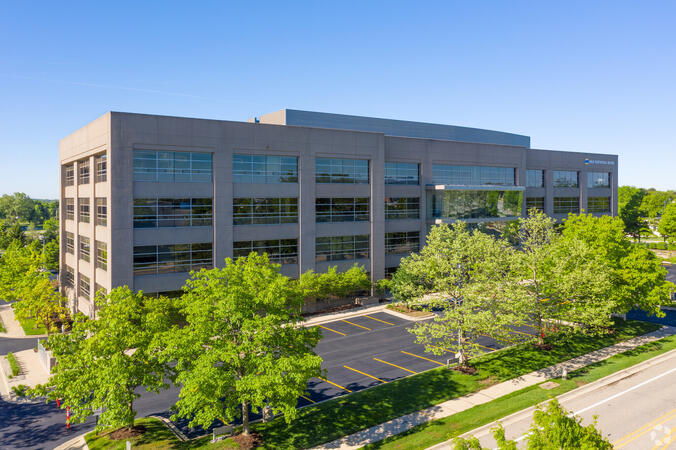
Ann Arbor, MI – Regus - South State Commons I
2723 S State St, Ann Arbor, United States, 48104
Regus South State Commons I is conveniently located off I‑94 via Exit 177 (State Street), with easy access to downtown Ann Arbor and surrounding suburbs. The building offers free on-site surface parking for guests. From Detroit Metropolitan Airport (DTW), the venue can be reached in approximately 20–25 minutes by taxi or rideshare via I‑94 West. Local public transit service (TheRide) operates Route 24 along South State Street, with a stop within a short 2-minute walk of the building.
Grand Rapids, MI - Regus – Calder Plaza
250 Monroe Ave NW, Grand Rapids, United States, 49503
The venue sits centrally at 250 Monroe Avenue NW in downtown Grand Rapids, easily accessed by car via US‑131 or I‑196—with connections via Monroe or Ottawa exits—and offers shared underground and surface parking. From Gerald R. Ford International Airport, take I‑96 East then I‑196 West into the city; the drive is about 20 minutes. Public transit through Rapid bus routes stops near Monroe or Ottawa Avenue, just a short walk from the Regus entrance; the downtown area is pedestrian-friendly.
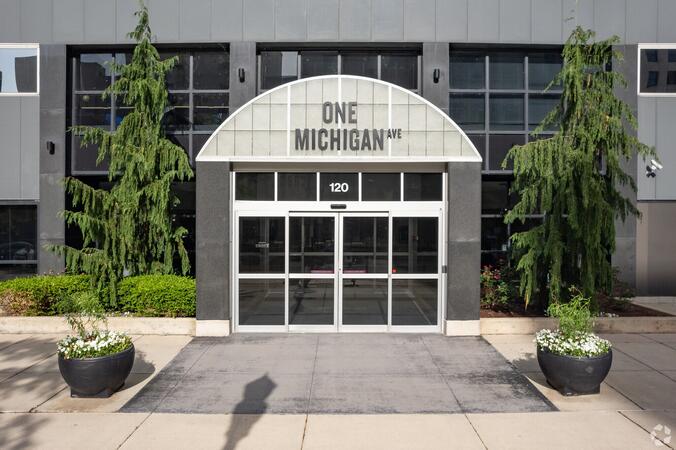
Lansing, MI - Regus - One Michigan Avenue
120 North Washington Square, Lansing, United States, 48933
The venue is located in the heart of Lansing’s central business district at 120 North Washington Square, easily accessible by car via I‑496 or US‑127 with convenient street parking and a nearby parking ramp. From Capital Region International Airport (LAN), the location is approximately a 12‑minute drive west via I‑96 and US‑127, with taxis and rideshares readily available. Public transit users can take CATA bus routes that stop just a block away on Washington or Grand Avenue, offering seamless access to the venue.
This course is designed for learners who already have a basic understanding of web development concepts, including familiarity with HTML, CSS, and hands-on experience with JavaScript or TypeScript. It is well-suited for front-end developers transitioning to modern Angular, software engineers building scalable web applications, and technical professionals who want to gain practical, real-world Angular skills.
Angular 20 is a robust front-end framework for building scalable, high-performance web applications.
This instructor-led, live training (online or onsite) is aimed at advanced-level developers who wish to build sophisticated, enterprise-grade Angular 20 applications.
Upon completing this course, participants will gain the skills to:
Implement advanced state management using modern Angular patterns.
Optimize rendering and performance across large applications.
Architect reusable, maintainable, and scalable Angular 20 modules.
Integrate advanced routing, signals, and reactive patterns effectively.
Format of the Course
Expert-guided lectures and collaborative discussion.
Extensive hands-on coding exercises.
Practical implementation in a real-world style development environment.
Course Customization Options
Custom training options are available upon request for teams with specialized requirements.
Angular is a modern, TypeScript-based framework for building scalable, high-performance web applications.
This instructor-led, live training (online or onsite) is aimed at beginner-level to intermediate-level developers who wish to build, structure, and deploy applications using Angular 20.
After completing this course, participants will be able to:
Create Angular 20 applications using best practices.
Work with components, templates, and standalone APIs.
Implement routing, state management, and HTTP communication.
Build production-ready applications with optimized performance.
Format of the Course
Instructor-guided demonstrations and discussions.
Extensive hands-on exercises and coding practice.
Real-world implementation in an interactive development environment.
Course Customization Options
If you require a tailored version of this course, please reach out to arrange a custom program.
This instructor-led, live training in Michigan (online or onsite) is aimed at intermediate-level web developers who wish to build, test, and deploy Angular 19 applications with the latest tooling, component architecture, and best practices.
By the end of this training, participants will be able to:
Set up and configure an Angular 19 development environment using the Angular CLI.
Create components, directives, services, and reactive forms.
Use routing, HTTP client, and state management with RxJS and signals.
Build, test, and deploy production-ready Angular applications.
This instructor-led, live training in Michigan (online or onsite) is aimed at beginner-level to intermediate-level developers who wish to build dynamic, modern web applications using Angular 18.
By the end of this training, participants will be able to:
Set up and configure Angular 18 projects.
Utilize Angular 18's new features and improvements, including optimized TypeScript 4.7 capabilities and zoneless change detection.
Develop robust, scalable applications using Angular 18.
Implement best practices for code organization and architecture.
This instructor-led, live training in Michigan (online or onsite) is aimed at beginner-level to intermediate-level developers who wish to use the latest features of Angular 17 to build, test, and deploy web applications.
By the end of this training, participants will be able to:
Set up a development environment that includes Node.js, Visual Studio Code, and Angular CLI.
Create a basic Angular 17 application that displays data and handles user interactions.
Use components, directives, pipes, services, and modules to organize and reuse code.
Use data binding, dependency injection, routing, forms, and HTTP client to communicate with backend services.
Use the new template control block syntax to simplify common tasks like conditional rendering, looping, and handling empty collections.
Use the new @defer control block to enable lazy-loading of the block's content and its dependencies.
Use the new view transitions API to customize the animations and transitions between views.
Debug and test Angular 17 applications using tools such as Chrome DevTools, Jest, Karma, and Protractor.
This instructor-led, live training in Michigan (online or onsite) is aimed at beginner-level to intermediate-level developers who wish to use the latest features of Angular 16 to build, test, and deploy web applications.
By the end of this training, participants will be able to:
Set up a development environment that includes Node.js, Visual Studio Code, and Angular CLI.
Create a basic Angular 16 application that displays data and handles user interactions.
Use components, directives, pipes, services, and modules to organize and reuse code.
Use data binding, dependency injection, routing, forms, and HTTP client to communicate with backend services.
Debug and test Angular 16 applications using tools such as Chrome DevTools, Jest, Karma, and Protractor.
This instructor-led, live training in Michigan (online or onsite) is aimed at experienced testers and developers who wish to deep dive into Angular testing.
By the end of this training, participants will be able to:
Understand Angular testing in-depth.
Perform advanced component and integration testing.
Perform end-to-end testing with Cypress and visual regression.
This instructor-led, live training in Michigan (online or onsite) is aimed at developers and programmers who wish to use the latest features of Angular 15 to build, test, and deploy web applications.
By the end of this training, participants will be able to:
Install and configure Angular 15.
Develop applications using Angular 15's component-based architecture.
Leverage Angular 15's built-in directives, services, and pipes.
Communicate with a RESTful API using Angular 15's HttpClient module.
Implement authentication and authorization in Angular 15 applications.
Test and debug Angular 15 applications.
Understand the new features of Angular 15 such as Image Directive, CDK List for Building UI Components, Boilerplate Reduction in Guards, and Improvements in esbuild for Faster Builds.
This instructor-led, live training in Michigan (online or onsite) is aimed at developers and programmers who wish to use the latest features of Angular 14 to build, test, and deploy web applications.
By the end of this training, participants will be able to:
Install and configure Angular 14.
Develop applications using Angular 14's component-based architecture.
Leverage Angular 14's built-in directives, services, and pipes.
Communicate with a RESTful API using Angular 14's HttpClient module.
Implement authentication and authorization in Angular 14 applications.
This instructor-led, live training in Michigan (online or onsite) is aimed at programmers who wish to use the latest features of Angular 13 to build, test, and deploy web applications.
By the end of this training, participants will be able to:
Use TypeScript and Angular CLI to develop Angular 13 applications.
Develop, test, and deploy Angular 13 web applications.
Create web components that can be used for any web application or page.
This instructor-led, live training in Michigan (online or onsite) is aimed at programmers who wish to create, test and deploy an Angular application using the latest features in Angular 12.
By the end of this training, participants will be able to:
Develop Angular 12 applications using TypeScript and the Angular CLI.
Create loosely coupled web components that can be used in any web application or HTML page.
Test, debug and deploy an Angular 12 application.
Organize Angular 12 projects using best practices.
Reactive programing is an asynchronous programing paradigm that focuses on data streams and the propagation of data by establishing a defined dependency between the underlying execution models and the emitted data streams from one component to another. Many Angular application design inefficiencies when building asynchronous UIs can be overcome by utilizing reactive style patterns offered by the RxJS library.
In this instructor-led, live training, participants will learn how to implement Observable patterns into their Angular application designs as they step through a series of cases showcasing common angular design problems and how they benefit from reactive programing designs.
By the end of this training, participants will be able to:
Understand the reactive programing paradigm and the RxJS library.
Build UI heavy Angular applications with scalability, flexibility, and responsiveness in mind using reactive programming patterns.
Format of the Course
Interactive lecture and discussion.
Lots of exercises and practice.
Hands-on implementation in a live-lab environment.
Course Customization Options
To request a customized training for this course, please contact us to arrange.
This instructor-led, live training in Michigan (online or onsite) is aimed at web developers who wish to use Angular and Spring Boot to build full stack applications.
By the end of this training, participants will be able to:
Develop a full stack application with Angular and Sping Boot.
Build a backend application with Spring Boot.
Create frontend applications with Angular.
Use Spring Security to configure authentication for a full stack application.
This is a hands on course is for anyone wanting to create Web sites using AngularJS.
During this course the latest stable version will be used. Pre-release version can be just used if marked in the booking form in remarks section. Older version need to be agreed before booking.
This instructor-led, live training (online or onsite) is aimed at developers who wish to reduce the cost and complexity of managing state in large data-driven web applications.
By the end of this training, participants will be able to:
Reduce the complexity of very large projects where managing state is difficult to maintain.
Minimize an application's state processes.
Reduce the time needed to develop complex data-oriented web applications.
Format of the Course
Interactive lecture and discussion.
Lots of exercises and practice.
Hands-on implementation in a live-lab environment.
Course Customization Options
To request a customized training for this course, please contact us to arrange.
To learn more about NgRx, please visit: https://ngrx.io/
This instructor-led, live training in Michigan (online or onsite) is aimed at beginner-level to intermediate-level developers who wish to build dynamic, modern web applications using Angular 2.
By the end of this training, participants will be able to:
Set up and configure Angular 2 projects.
Utilize Angular 2's features and improvements.
Develop robust, scalable applications using Angular 2.
Implement best practices for code organization and architecture.
Integrate Angular applications with RESTful APIs.
Read more...
Last Updated:
Testimonials (8)
all the important part were covered
carlo capuano - ITER Organization
Course - Angular 18
The trainer’s attitude – helping you feel comfortable, making jokes to lighten the mood, and answering everyone’s questions.
Ana Fedeles
Course - Angular 20
I truly appreciated how thorough this course was! It covered so many aspects in depth, making the learning experience incredibly enriching.
Andrei
Course - NgRx
I mostly liked the training flow; she went through the topic, and at the end of the topic, she had well-defined practice sessions for us. She was able to guide us promptly with the issues we faced in the practice sessions.
Rabin Byanjankar - Lument
Course - Angular 17
In only three days were covered all the subjects from training material, even extra.
Ovidiu
Course - Angular 2 Fundamentals
- I really like the course and the Trainor is very accommodating and has a great knowledge on the topic. It just that not all topics are discussed in the 4-day training.
Allan - Tribal Software Philippines Inc
Course - Angular 14
Explaining while coding - approach of showing in practice wrong behavior/pattern first and then showing how it can be improved and how it should look like in better way.
Online Angular training in Michigan, Angular training courses in Michigan, Weekend Angular courses in Michigan, Evening Angular training in Michigan, Angular instructor-led in Michigan, Angular instructor-led in Michigan, Angular one on one training in Michigan, Angular on-site in Michigan, Weekend Angular training in Michigan, Online Angular training in Michigan, Angular classes in Michigan, Angular private courses in Michigan, Angular boot camp in Michigan, Angular instructor in Michigan, Evening Angular courses in Michigan, Angular coaching in Michigan, Angular trainer in Michigan